
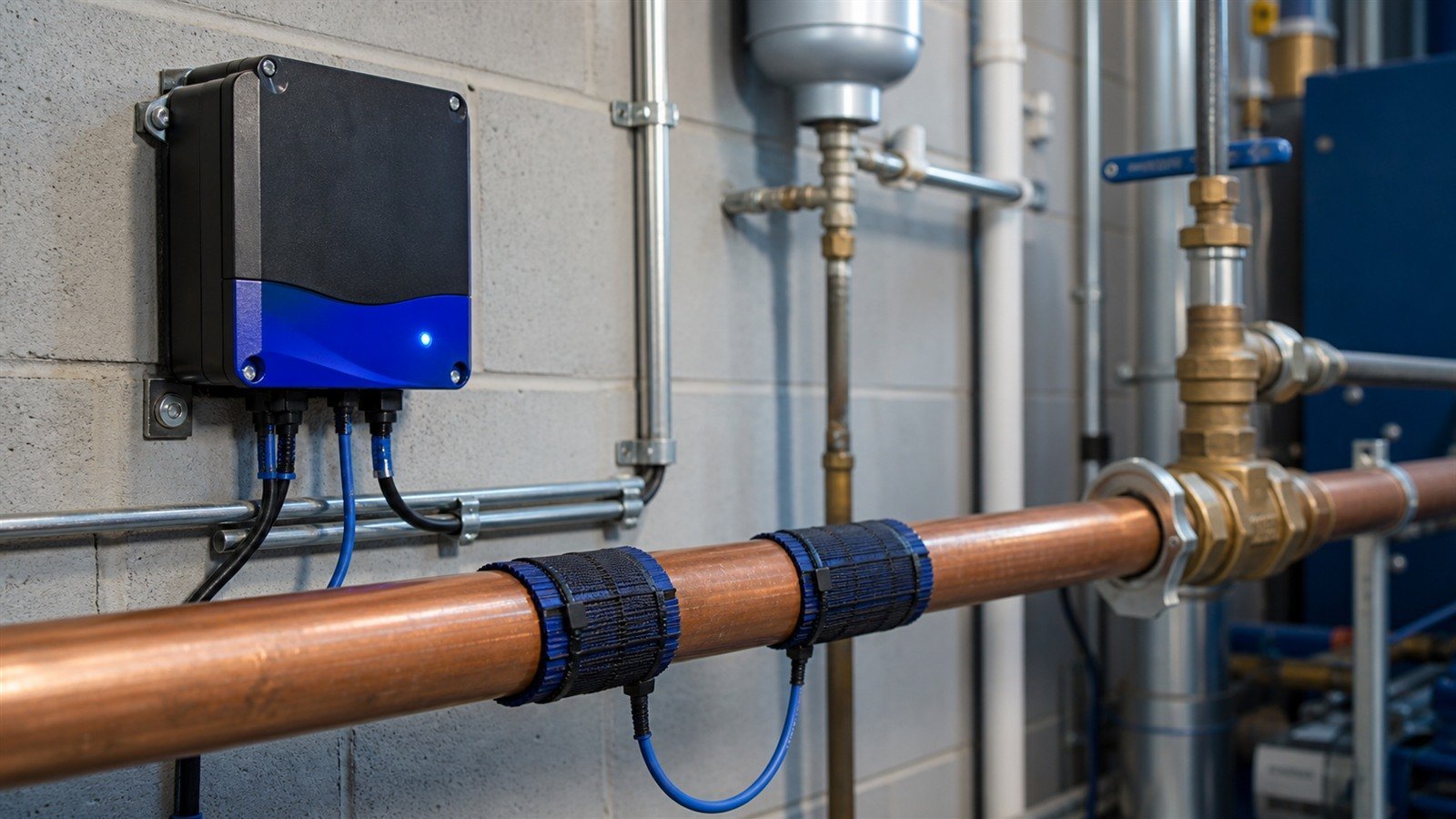
Few water treatment topics spark more debate than salt-free electronic scale control. Blog articles, forum posts, and even some plumbers call them snake oil, while others swear by them. The truth is that the technology matters. Below you'll find a deep dive into how electronic descalers work, why many budget units disappoint, and why Vulcan's patented capacitive-impulse system is the reliable option MT Treatment trusts for Greater Toronto properties.
1. What Exactly Is Limescale - and Why Is It a Problem?
- Hard water basics - When water contains more than 200 mg/L of dissolved calcium and magnesium (the Health Canada threshold for poor water quality), those minerals precipitate as hard, chalky deposits whenever the water is heated or depressurized.
- Hidden costs - Just 1 mm of limescale can raise water-heating energy use by 7-10% and shorten the life of heaters, boilers, and dishwashers.
- Symptoms you see - Spotty glassware, clogged shower heads, flaky kettle elements, and slow-running faucets.
2. Comparing Scale-Control Options
Ion-Exchange Water Softeners
How it works: Swaps calcium and magnesium for sodium or potassium ions using a resin tank. Pros: delivers truly soft water and excellent protection for plumbing and appliances. Cons: adds salt to your water and wastewater, and requires regular salt top-ups and servicing.
Reverse Osmosis (RO) Systems
How it works: Pushes water through a semi-permeable membrane that filters out nearly all minerals and impurities. Pros: very pure water, ideal for drinking, cooking, and sensitive equipment. Cons: slower flow rates, produces wastewater during filtration, and higher installation costs.
Electronic Descaler (Capacitive-Impulse)
How it works: Uses electric pulses to reshape calcium crystals into a non-sticky form that stays suspended in water. Pros: salt-free and chemical-free, preserves healthy minerals, no maintenance or refills, and safe for all pipe types. Cons: requires proper coil design and signal frequency, and results build up over several weeks rather than instantly.
Magnetic Clamp-On Devices
How it works: Claims to polarize mineral ions using magnetic fields placed around the pipe. Pros: inexpensive, easy to install, and no power required. Cons: weak magnetic fields decay rapidly and may not reach water inside the pipe, can't adapt to different pipe materials, often show little or no measurable impact, and are unsupported by consistent lab testing.
3. How Capacitive-Impulse Descalers Work
Traditional softeners remove hardness; descalers re-engineer it.
- Impulse coils wrap around your main water line.
- A micro-controller sends multi-frequency electric pulses through the coils.
- The field forces dissolved calcium carbonate to form tiny, rounded aragonite crystals that don't stick to metal or plastic surfaces.
- Crystals remain suspended and wash harmlessly down the drain.
Because the treatment occurs inside the water column - not inside the pipe wall - material, diameter, and flow rate have minimal impact, so Vulcan works equally well on copper, PVC, PEX, or steel lines.
4. Why Many Cheap Magnetic Units Fail
- Rapid field decay - Magnetic flux drops sharply with distance; water in the centre of a pipe feels almost nothing.
- Single frequency - Scale forms across a broad frequency band; one static field can't cover it.
- No pipe-specific tuning - Steel and plastic respond differently; generic magnets can't adapt.
- Poor ingress protection - In damp basements, low-cost electronics corrode and lose output.
Independent studies and consumer tests have repeatedly shown inconsistent or no measurable improvement with basic permanent-magnet devices.
5. Why MT Treatment Recommends Vulcan
- Patented capacitive-impulse technology - Vulcan generates a programmable sweep of low-frequency signals that covers the full crystal-growth spectrum. No moving parts, no salt bags - just a 2.5 W draw (less than a night-light).
- Certified and proven - The system meets WRAS safety standards and is backed by laboratory and field studies in hotels, hospitals, and food-service facilities worldwide.
- External, non-intrusive install - Our licensed plumbers mount the control box and wrap twin copper coils - no pipe cutting, no downtime. If you relocate, simply take it with you.
- Compatible with any water chemistry - Because Vulcan keeps minerals in solution, you get scale control without stripping calcium and magnesium.
6. Cost & Maintenance Comparison
- Ion-exchange softener: higher up-front cost plus ongoing annual salt and service.
- Vulcan Descaler: one-time install with zero consumables.
- ROI: at roughly 10% energy savings, most sites recover the cost in a few years - faster for electric or tankless heaters.
7. Environmental Impact
No chloride discharge - municipalities across Ontario are tightening salt limits in wastewater, and Vulcan is fully compliant. Lower carbon footprint - cutting scale by 1 mm saves up to 10% heating energy.
8. What to Expect After Installation
- Days 1-30: Water feels the same; older scale begins to soften.
- Month 1-3: Scale flakes in kettles, sediment in aerators (a good sign).
- Month 3-6: Elements, faucets, and pipes show bare metal again; water pressure stabilizes.
- Long-term: Consistent flow, lower power bills, fewer appliance repairs.
9. Frequently Asked Questions
Does Vulcan soften water? No. Hardness minerals stay in the water, but scale can't stick, so soap lather improves and spotting declines. Can it treat very hard water? Yes, though we may recommend pairing it with a traditional softener for laundry or RO-line protection. Will it corrode copper pipes? No - Vulcan has been shown to reduce corrosive pitting. Is there any maintenance? Just wipe dust off the control unit once a year and ensure the coils stay tight. Does it affect drinking-water taste? No, because minerals remain and nothing is added.
Next Steps - Protect Your Plumbing the Salt-Free Way
If you're ready for scale-free pipes without salt or chemicals, schedule an assessment with MT Treatment's licensed team. We'll test your hardness, size the right Vulcan model, and back it with both the manufacturer's warranty and our own labour guarantee.